

Interview with Dr. Anna Oldershaw: Working with Stuckness

“I’m Stuck”: Understanding and Working with Stuckness in Therapy
“I’m stuck.” It’s a common way people arrive in therapy. It can also emerge mid-therapy, when momentum slows, familiar patterns persist, and both therapist and client begin to feel frustrated or uncertain about what comes next.

To explore why people get stuck, what keeps them there, and how practitioners can work more effectively with these moments, we spoke with Dr Anna Oldershaw, Consultant Clinical Psychologist, Director of the Emotion-Focused Therapy Institute of England, and presenter of AIEFT’s upcoming Working with Stuckness workshop.
Q: Anna, why did you decide to develop a workshop focused on stuckness?
Anna: One of the things I’ve noticed throughout my clinical work is just how common experiences of stuckness are. People often come to therapy because they feel unable to move forward in some area of their lives. Sometimes therapy itself can become stuck, despite both client and therapist working hard towards change.
When this happens, it’s easy to move quickly into problem-solving, offering strategies, or trying to help clients find solutions. Yet many people continue to struggle, even when they understand what they need to do or have access to helpful tools.
I became interested in understanding what is actually happening when people feel stuck, and how we can work with that experience more effectively rather than trying to bypass it.
Q: When you talk about “stuckness”, what do you mean?
Anna: Feeling stuck can take many forms.

Sometimes clients struggle to access emotion. Sometimes they find it difficult to receive empathy or engage fully in the therapeutic process. In other cases, there may be chronic self-interruption, ambivalence about therapy, or neurodivergent processes that influence how clients engage with therapy and emotional experiences.
What is important is recognising that not all stuckness is the same. Different forms of stuckness require different therapeutic responses. The workshop explores how we can identify and differentiate these presentations so that we can respond in ways that are more helpful and effective.
Q: Why can stuckness be so challenging for therapists?
Anna: Stuckness can be frustrating for everyone involved.
Clients often feel discouraged because they want change but can’t seem to access it. Therapists may find themselves working harder and harder, trying different interventions, or questioning whether they are missing something important.
When we don’t fully understand the nature of the stuckness, it can create tension in the therapeutic relationship and leave both people feeling uncertain about where to go next.
Part of the workshop involves helping therapists understand stuckness not as a failure of therapy, but as meaningful information about what is happening for the client.
Q: The workshop introduces some new tasks developed through the SPEAKS program. Can you tell us about that?
Anna : The SPEAKS program was developed through work with individuals experiencing enduring eating disorders, many of whom presented with chronic experiences of stuckness.
As part of that work, we developed and adapted a number of tasks designed to help clients engage with their “stuck place” more directly. These tasks help clients explore what stuckness means to them, connect with associated emotions and unmet needs, and begin to understand what may be maintaining the difficulty.
Although these tasks were developed within eating disorder work, they have proven useful across a wide range of clinical presentations.
Q: What can participants expect from the workshop?
Anna: The workshop is interactive and lively.
We’ll explore why people get stuck, what keeps them stuck, and how therapists can work with these experiences more effectively.
Participants will reflect on how stuckness in therapy impacts them as a therapist, learn ways of formulating stuckness, and how to engage with it through focused tasks, including both traditional and adapted interventions to help clients move forward.
There will be teaching, video demonstrations, discussion, and opportunities for experiential practice in small groups. Participants will also receive detailed workbooks with step-by-step guidance for the tasks covered.
Q: What do you hope participants will take away?
Anna: My hope is that participants leave with both a better understanding of stuckness and greater confidence in working with it.
Rather than seeing stuckness as something to avoid or push through, I hope therapists will come to see it as an important part of the therapeutic process, something that can be welcomed, understood, and worked with meaningfully.
When we can help clients connect with what is happening beneath their stuckness, new possibilities for movement and change often begin to emerge.
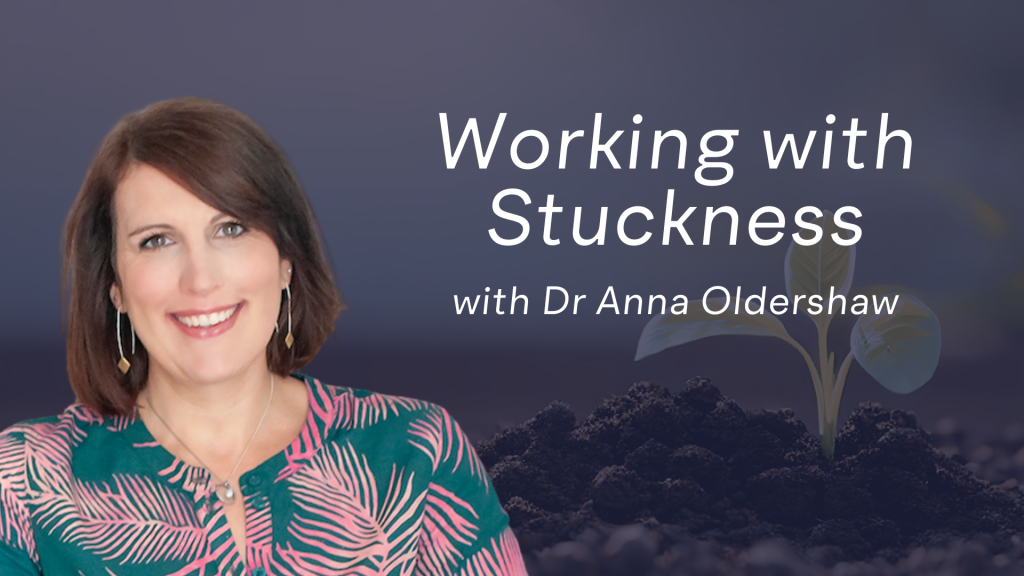
Workshop: Working with Stuckness
Join Dr Anna Oldershaw for this practical online workshop exploring how to recognise, understand, and work with stuckness in therapy. Find out more about this workshop here.
Download a flyer for this training here.
Resource – ‘Transforming Emotional Pain and Rediscovering the Self in Anorexia Nervosa’
(Routledge, 2025)

